Grinder Type in Coffee Grinders: What It Is and Is It Worth It?
As an Amazon Associate we earn from qualifying purchases. Links on this page are affiliate links.
Grinder Type Explained for You
The grinder type explained defines how coffee beans are crushed into particles. This spec determines the quality and consistency of your brew. You will see four main categories in listings. These are blade, conical burr, flat burr, and generic burr. Understanding these differences helps you choose the right tool.
Blade grinders use a spinning metal blade. This action chops beans randomly. The result is uneven particle sizes. Some grounds are fine dust. Others remain large chunks. This inconsistency leads to uneven extraction. You might taste bitterness from over-extracted fines and sourness from under-extracted boulders. Blade grinders are simple. They lack precise control.
Burr grinders crush beans between two abrasive surfaces. This method produces uniform particles. There are two main burr designs. Conical burrs feature a cone-shaped inner burr rotating inside a ring. They generate less heat. This preserves flavor. They are also quieter. Flat burrs use two parallel rings. One rotates while the other stays still. They offer high consistency at speed. However, they can generate more heat.
Listings label these specs clearly. Look for "burr" or "blade" in the title. Check the product details for "conical" or "flat." Generic "burr" labels usually mean conical unless stated otherwise. The material matters too. Ceramic burrs stay cooler. Steel burrs last longer.
Why does this matter? Consistent grounds extract evenly. This creates a balanced cup. You avoid muddy or sharp flavors. Burr grinders allow you to adjust the gap between surfaces. This controls grind size. You can match the setting to your brew method. Blade grinders do not offer this precision. For serious coffee gear, burr grinders are the standard. They deliver reliability. They ensure every cup tastes as intended. Choose based on your brewing style and desired consistency.
Grinder Type Options Compared
Burr
This category covers grinders that use two abrasive surfaces to crush beans rather than chopping them. It is a broad term often used when a listing does not specify the burr shape. You get better consistency than blade models. The generic burr label usually signals a basic mechanism. It suits users who want a step up from spinning blades but do not need specialized features. The trade-off is that you may not know if the burrs are conical or flat until you read the full details. The OXO Brew 40mm Conical Burr Grinder fits this group by offering precise micro-adjustments and UV protection for bean freshness.
Blade
Blade grinders use a single spinning propeller to chop beans into particles. This method relies on time rather than a fixed gap to determine grind size. You will get uneven particle sizes with this type. It creates more heat and static in the grounds. This option suits casual home brewers who prioritize simplicity and small footprint over extraction quality. It is not suitable for specialty coffee needs or precise brewing methods. The KRUPS 3 oz Blade Coffee Grinder is a basic tool for small kitchens. The Cuisinart One-Touch Blade Coffee Grinder offers a compact design for users who do not need fine-tuned control.
Conical Burr
Conical burr grinders use cone-shaped surfaces that rotate inside each other. This design typically generates less heat and noise than flat burrs. You get a consistent grind with fewer fines. This type is versatile for many brewing methods. It suits home users who want even extraction and easy cleaning. The trade-off is often a larger footprint than manual options. The Aromaster Conical Burr Grinder offers 48 settings and anti-static features for home use. It fits those who value consistency over smart connectivity. The OXO Brew model also uses this shape for precise adjustments.
Flat Burr
Flat burr grinders use two parallel flat rings to crush beans. This design often provides very uniform particle size for brewed coffee methods. You get excellent clarity in your cup. This type suits enthusiasts who prioritize even extraction for pour-over or drip methods. It is less ideal for espresso due to retention and speed issues. The trade-off is that flat burrs can be louder and more expensive. The Fellow Ode Gen 2 64mm Flat Burr Grinder is a precise option for brewed coffee. It offers single-dose freshness and automatic operation for those who value precision over high-volume capacity.
Is Burr Type Worth It?
Who needs it
You should prioritize burr grinders if you care about brew consistency. Blade grinders chop beans unevenly, creating a mix of fine dust and large chunks. This inconsistency leads to uneven extraction, making your coffee taste bitter or sour. Burr grinders, whether conical or flat, crush beans between two surfaces. This method produces particles of similar size. Uniform grounds allow water to flow through evenly. You get a cleaner, more balanced flavor profile. If you brew with pour-over, espresso, or AeroPress, this consistency matters. Small changes in grind size drastically affect taste. Burr types offer control over that size. Blade models offer little control. You need precision for specialty coffee. If you want to taste the nuances of your beans, burr is essential. The type of burr matters less than the fact that it is a burr. Start with any burr model before upgrading to specific shapes.
Who can skip it
You can skip detailed burr research if you just need caffeine. Blade grinders are sufficient for basic drip coffee or instant coffee mixes. They are often cheaper and smaller. If you prioritize compact storage over flavor nuance, blade works. You can ignore conical versus flat distinctions entirely at this stage. Focus on motor power and cup capacity instead. These factors determine how long it takes to grind and how much you can make at once. Blade grinders are also easier to clean for some users. The burr mechanism has more parts. If you drink black coffee with milk or sugar, minor extraction flaws are masked. You do not need precision. Save your effort for other gear. Look for a durable blade model with a secure lid. Ensure it fits your counter space. The grinder type is not the main decision here. Convenience and size are. You can upgrade to a burr grinder later if your taste changes. Start simple.
Coffee Grinder Glossary
Grinder Type
The mechanism used to crush beans. Common types include blade, conical burr, flat burr, and generic burr. This spec dictates particle consistency and extraction quality.
Brew Method
The technique used to extract flavor, such as espresso, pour-over, or French press. Your chosen method determines the required grind size and consistency for best results.
Power Source
How the grinder operates. Options include AC mains electricity or battery power. Battery models offer portability but may have less consistent torque than plug-in units.
Control Type
The interface for adjusting settings. This includes manual dials, digital buttons, or touch panels. The control type affects how precisely you can set your grind size.
Grind Settings
The number of distinct particle sizes available. More settings allow finer tuning. Look for at least forty steps to cover espresso through French press needs.
Burr Material
The substance forming the grinding surfaces. Common materials are stainless steel or ceramic. Steel offers durability, while ceramic resists heat buildup and corrosion.
Quick picks
| # | Product | Best for | Price |
|---|---|---|---|
| 1 | OXO Brew 40mm Conical Burr Grinder | UV bean protection and precise micro-adjustments | Check price of OXO Brew 40mm Conical Burr Grinder on Amazon |
| 2 | KRUPS 3 oz Blade Coffee Grinder | casual home brewing and small batches | Check price of KRUPS 3 oz Blade Coffee Grinder on Amazon |
| 3 | Fellow Ode Gen 2 64mm Flat Burr Grinder | brewed coffee methods like pour-over and drip | Check price of Fellow Ode Gen 2 64mm Flat Burr Grinder on Amazon |
| 4 | CEVING Mini Manual Ceramic Burr Coffee Grinder | travelers and manual grind enthusiasts | Check price of CEVING Mini Manual Ceramic Burr Coffee Grinder on Amazon |
| 5 | Cuisinart One-Touch Blade Coffee Grinder | casual brewers needing simple, compact grinding | Check price of Cuisinart One-Touch Blade Coffee Grinder on Amazon |
| 6 | Aromaster Conical Burr Grinder with 48 Settings | Home users wanting 48 grind settings and anti-static features | Check price of Aromaster Conical Burr Grinder with 48 Settings on Amazon |
Our 6 picks
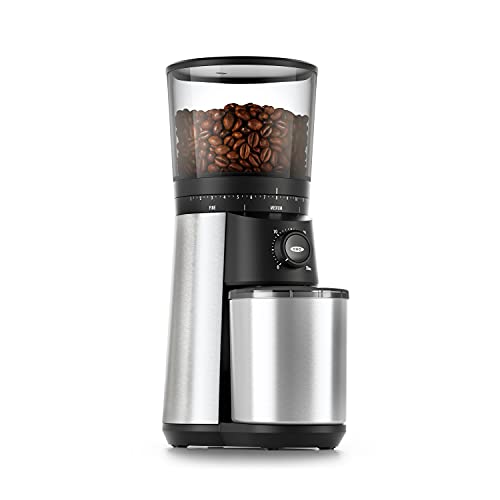
OXO Brew 40mm Conical Burr Grinder
Best for: UV bean protection and precise micro-adjustments
- Grinder Type
- Burr, Conical Burr (what this guide is about)
- Grinding Mechanism
- Conical burr
- Burr Size
- 40mm
- Burr Material
- Stainless steel
- Grind Settings
- 15 settings (plus 43 micro-adjustments)
- Bean Capacity
- 12 oz
View on Amazon: OXO Brew 40mm Conical Burr Grinder Affiliate link
This electric grinder uses 40mm stainless steel conical burrs for uniform grounds. It offers 15 main settings with 43 micro-adjustments for precise control. The 12-ounce hopper includes UV-blocking tint to protect beans. One-touch start remembers your last setting. It suits those who want consistent extraction for various brew methods without complex programming.
Pros
- 40mm stainless steel conical burrs
- 15 settings plus 43 micro-adjustments
- 12-ounce UV-blocking bean hopper
- One-touch start remembers last setting
Cons
- Fewer total settings than competitors with 40+ options
- Heavier at 4.5 pounds
- Larger footprint than mini manual grinders
Good fit if
- You want UV protection for your beans
- You prefer remembering your last grind setting
- You need micro-adjustments for precision
Skip if
- You need more than 15 main grind steps
- You want a compact counter space saver
- You prefer manual operation
Verdict: OXO Brew 12 Oz Conical Burr Grinder fits users who value bean freshness and precise micro-adjustments over high volume. Its UV-blocking hopper and memory feature make it a steady choice for daily brewing.

KRUPS 3 oz Blade Coffee Grinder
Best for: casual home brewing and small batches
- Grinder Type
- Blade (what this guide is about)
- Grinding Mechanism
- Blade
- Bean Capacity
- 3 oz / 85g
- Power Source
- 200W motor
- Compatible Food
- Herbs
- Material
- Stainless Steel
View on Amazon: KRUPS 3 oz Blade Coffee Grinder Affiliate link
This KRUPS grinder uses a 200W motor and stainless steel blades to chop beans. It features a 3 oz capacity, handling up to 12 cups. You control the grind size by pressing and holding the single button. The lid-activated safety mechanism prevents operation unless closed. It suits those who need a compact, one-touch solution for various brew methods.
Pros
- 200W electric motor for efficient grinding
- Stainless steel blades for versatility
- 3 oz capacity for up to 12 cups
- One-touch press-and-hold operation
- Lid-activated safety mechanism
Cons
- Blade mechanism yields inconsistent particle size
- No adjustable grind settings for precision
- 3 oz capacity limits large batches
Good fit if
- You want simple one-button operation
- You need a compact countertop footprint
- You grind small batches frequently
Skip if
- You require precise espresso consistency
- You grind more than 12 cups at once
- You prefer burr grinder uniformity
Verdict: KRUPS Electric Blade Coffee Grinder is a basic tool for casual users who prioritize simplicity and space over grind precision. It fits small kitchens but fails for specialty coffee needs.

Fellow Ode Gen 2 64mm Flat Burr Grinder
Best for: brewed coffee methods like pour-over and drip
- Grinder Type
- Burr, Flat Burr (what this guide is about)
- Grinding Mechanism
- Flat burr
- Burr Size
- 64mm
- Burr Material
- Stainless steel
- Grind Settings
- 31
- Bean Capacity
- 100g
View on Amazon: Fellow Ode Gen 2 64mm Flat Burr Grinder Affiliate link
The Fellow Ode Gen 2 is an electric flat burr grinder built for brewed coffee. It features 64 mm flat burrs and 31 grind settings for pour-over, drip, French press, and cold brew. The 100 g single-dose bin holds only what you need. Anti-static technology and a built-in knocker reduce retention. It shuts off automatically when grinding is complete.
Pros
- 64 mm flat burrs for consistent particle size
- 31 grind settings optimized for brewed coffee
- 100 g single-dose load bin keeps beans fresh
- Built-in knocker and anti-static tech reduce retention
- Automatic shut-off requires no timing or monitoring
Cons
- Not designed for espresso brewing
- 100 g bean capacity is limited for larger batches
- Only 31 grind settings compared to higher counts in this category
Good fit if
- You brew pour-over, drip, French press, or cold brew
- You prefer single-dose grinding to keep beans fresh
- You want a quiet, compact grinder with low retention
Skip if
- You need to grind espresso beans
- You frequently brew for more than 100 g of coffee at once
- You require more than 31 grind adjustments for fine-tuning
Verdict: Fellow Ode Gen 2 Flat Burr Grinder is a precise, low-retention option for brewed coffee enthusiasts who value single-dose freshness and automatic operation. It suits those who prioritize even extraction for pour-over or drip methods over high-volume or espresso capabilities.

CEVING Mini Manual Ceramic Burr Coffee Grinder
Best for: travelers and manual grind enthusiasts
- Grinder Type
- Burr (what this guide is about)
- Grinding Mechanism
- Conical burr
- Burr Material
- Ceramic
- Grind Settings
- 40
- Bean Capacity
- 30g
- Power Source
- Manual
View on Amazon: CEVING Mini Manual Ceramic Burr Coffee Grinder Affiliate link
This manual grinder uses a conical ceramic burr for uniform grinding with less heat. It offers 40 external adjustment settings for precise control. The 30g bean capacity is small, and the unit weighs only 13.4 ounces. Its compact size makes it ideal for travel or camping. You get a portable, manual option that prioritizes portability and grind consistency over speed.
Pros
- Conical ceramic burr material preserves flavor
- 40 external grind settings for precision
- Lightweight design at 13.4 ounces
- Detachable parts for easy cleaning
Cons
- Small 30g bean capacity
- Manual operation requires physical effort
- Not recommended for large household use
Good fit if
- You travel frequently or camp outdoors
- You want precise manual grind control
- You prefer ceramic burrs for flavor
Skip if
- You need to grind large batches
- You prefer electric convenience
- You want a high-capacity grinder
Verdict: CEVING Mini Manual Ceramic Burr Grinder is a lightweight, portable option for travelers who value grind consistency. It fits users who prioritize manual precision over speed and capacity.
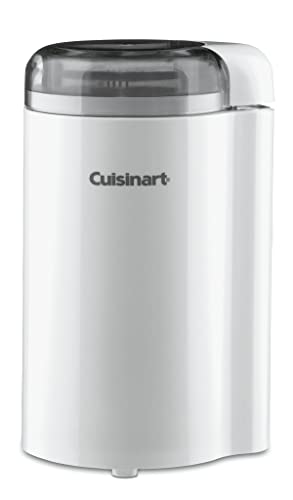
Cuisinart One-Touch Blade Coffee Grinder
Best for: casual brewers needing simple, compact grinding
- Grinder Type
- Blade (what this guide is about)
- Grinding Mechanism
- Blade
- Bean Capacity
- 70g/2.5 oz
- Power Source
- Electric
- Dosing Control
- On/Off Switch
- Control Type
- One Touch
View on Amazon: Cuisinart One-Touch Blade Coffee Grinder Affiliate link
This Cuisinart electric grinder uses stainless steel blades to chop beans. It holds 2.5 ounces, enough for 12 cups. The one-touch switch and safety interlock make it simple. Its compact 4x4x7 inch frame fits small counters. You get consistent results for everyday brewing. It suits those who want basic, reliable grinding without complexity.
Pros
- Stainless steel blades for consistent grinding
- One-touch on/off control for simplicity
- Safety interlock prevents operation if lid is open
- Holds up to 2.5 oz of beans
- Includes cord storage for tidy counter space
Cons
- Blade mechanism creates uneven particle sizes
- No adjustable grind settings for precision
- Smaller capacity than conical or flat burr models
Good fit if
- You need a simple, one-touch operation
- You grind small batches for personal use
- You want a compact footprint for limited counter space
Skip if
- You require uniform particle size for espresso
- You need multiple grind size adjustments
- You frequently grind large quantities for guests
Verdict: Cuisinart DC-20N Blade Grinder is a basic tool for users who prioritize simplicity and compact size over grind precision. It fits casual drinkers who do not need fine-tuned control.
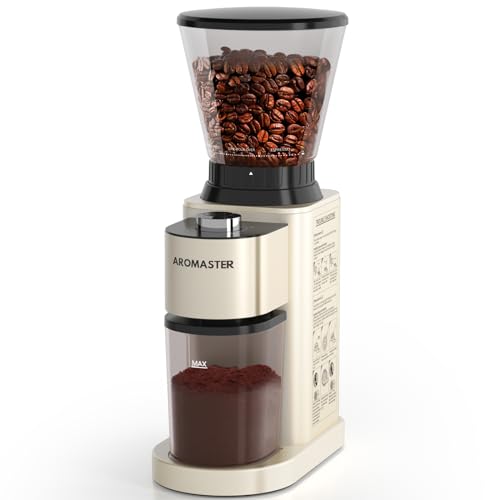
Aromaster Conical Burr Grinder with 48 Settings
Best for: Home users wanting 48 grind settings and anti-static features
- Grinder Type
- Burr, Conical Burr (what this guide is about)
- Grinding Mechanism
- Conical burr
- Burr Material
- Stainless steel
- Grind Settings
- 48
- Bean Capacity
- 3.9 ounces
- Power Source
- Electric (120V, 60Hz)
View on Amazon: Aromaster Conical Burr Grinder with 48 Settings Affiliate link
The Aromaster electric grinder uses a stainless steel conical burr mechanism with 48 grind settings. It handles doses up to 3.9 ounces via a timer. Anti-static technology and a built-in brush help maintain a clean workspace. This beige model suits home users who want even extraction without excessive heat buildup.
Pros
- 48 adjustable grind settings for various brew methods
- Stainless steel conical burrs for even grinding
- Anti-static technology reduces mess
- Built-in brush prevents blockages
Cons
- 3.9-ounce bean capacity is smaller than many competitors
- Timer-based dosing lacks precision compared to weight sensors
- No app or Bluetooth connectivity for smart features
Good fit if
- You want 48 specific grind adjustments
- You prefer anti-static features to keep counters clean
- You need a stainless steel conical burr system
Skip if
- You require more than 3.9 ounces of bean capacity
- You need precision weight-based dosing control
- You want smart app integration for remote operation
Verdict: Aromaster Conical Burr Coffee Grinder delivers 48 settings and anti-static benefits for home use. It fits those who value even extraction and easy cleaning over large capacity or smart connectivity.
Specifications side by side
| Spec | OXO Brew 40mm Conical Burr Grinder | KRUPS 3 oz Blade Coffee Grinder | Fellow Ode Gen 2 64mm Flat Burr Grinder | CEVING Mini Manual Ceramic Burr Coffee Grinder | Cuisinart One-Touch Blade Coffee Grinder | Aromaster Conical Burr Grinder with 48 Settings |
|---|---|---|---|---|---|---|
| Grinding Mechanism | Conical burr | Blade | Flat burr | Conical burr | Blade | Conical burr |
| Burr Size | 40mm | not stated | 64mm | not stated | not stated | not stated |
| Burr Material | Stainless steel | not stated | Stainless steel | Ceramic | not stated | Stainless steel |
| Grind Settings | 15 settings (plus 43 micro-adjustments) | not stated | 31 | 40 | not stated | 48 |
| Bean Capacity | 12 oz | 3 oz / 85g | 100g | 30g | 70g/2.5 oz | 3.9 ounces |
| Power Source | Electric | 200W motor | Electric | Manual | Electric | Electric (120V, 60Hz) |
| Dosing Control | not stated | not stated | Single dose, auto-stop | not stated | On/Off Switch | 40s adjustable timer |
| Grinder Type | Burr, Conical Burr | Blade | Burr, Flat Burr | Burr | Blade | Burr, Conical Burr |
| Brew Method | French Press, Drip Coffee, Cold Brew | not stated | French Press, Pour Over | French Press, Pour Over | not stated | Espresso, French Press |
| Control Type | One Touch | not stated | not stated | not stated | One Touch | not stated |
| Compatible Food | not stated | Herbs | not stated | not stated | not stated | not stated |
| Application | not stated | not stated | Home Use | Travel, Camping | not stated | Home Use |
| Size | One Size | Black (Pack of 2) | 120v, Type B Plug | Mini | Blade Grinder | Household |
| Base Type | not stated | not stated | Flat Base | not stated | not stated | not stated |
| Features | not stated | not stated | not stated | not stated | not stated | Timer |
| Material | Stainless Steel | Stainless Steel | Stainless Steel | not stated | Stainless Steel | Stainless Steel |
| Dimensions | 6.8 × 11.8 × 14.8 inches | 4 × 4 × 9.13 inches | 9.41 × 4.13 × 9.78 inches | 7.4 × 2.3 × 6.7 inches | 4 × 4 × 7 inches | not stated |
| Weight | 4.5 pounds | 3.09 pounds | 9.92 pounds | 13.4 ounces | 1.8 pounds | not stated |
| Color | Silver | Black | Matte Black | M01 Black | White | Beige |
| Model | 8717000 | F20342 | Ode Gen 2 | MCG-01 | DCG-20N | 204 |
Frequently asked questions
What is the difference between conical and flat burr grinders?
Conical burrs use cone-shaped surfaces to crush beans, often resulting in lower retention and less heat generation. Flat burrs employ two parallel rings to shear beans, which can offer higher speed and consistency for brewed coffee. The OXO Brew uses conical burrs for precise micro-adjustments, while the Fellow Ode Gen 2 utilizes 64mm flat burrs for even extraction in pour-over methods.
Are blade grinders good for espresso?
No, blade grinders are not suitable for espresso. They chop beans unevenly, creating a mix of fine dust and large chunks. Espresso requires a very fine, consistent grind for proper pressure extraction. Blade models like the KRUPS 3 oz or Cuisinart One-Touch lack the precision needed, leading to bitter or sour tastes due to uneven extraction.
Which grinder type is best for travel?
Manual burr grinders are ideal for travel due to their portability and lack of power requirements. The CEVING Mini Manual Ceramic Burr Grinder weighs only 13.4 ounces and features ceramic burrs for consistent grinding without electricity. It is lightweight and compact, making it perfect for travelers who prioritize grind consistency over speed and large capacity.
Does a generic burr grinder differ from conical or flat?
Generic burr listings often do not specify the burr shape, simply indicating the use of two abrasive surfaces. This broad category usually implies better consistency than blade grinders. For example, the OXO Brew and Aromaster specify conical burrs for specific benefits like UV protection or 48 settings, while generic labels leave the exact geometry undefined for the buyer.
How does grinder type affect coffee flavor?
Grinder type directly impacts extraction quality. Blade grinders produce inconsistent particle sizes, causing some grounds to over-extract and others to under-extract. This results in unbalanced flavors. Burr grinders, whether conical or flat, crush beans uniformly, ensuring even extraction. This consistency allows you to highlight specific flavor notes without the bitterness or sourness associated with uneven grinding.
What is the best burr grinder for pour-over?
Flat burr grinders are often preferred for pour-over and drip methods due to their ability to provide even extraction. The Fellow Ode Gen 2 features 64mm flat burrs and is designed for brewed coffee enthusiasts who value single-dose freshness. Its automatic operation and precise grinding suit the needs of pour-over brewers seeking clarity and balance in their cup.